four note friday 2.44 | Takeaways from "Exploring Sense of Community and Place Identity via Murals: A Photovoice Study in the Anthracite Coal Region of Northeastern Pennsylvania, USA"

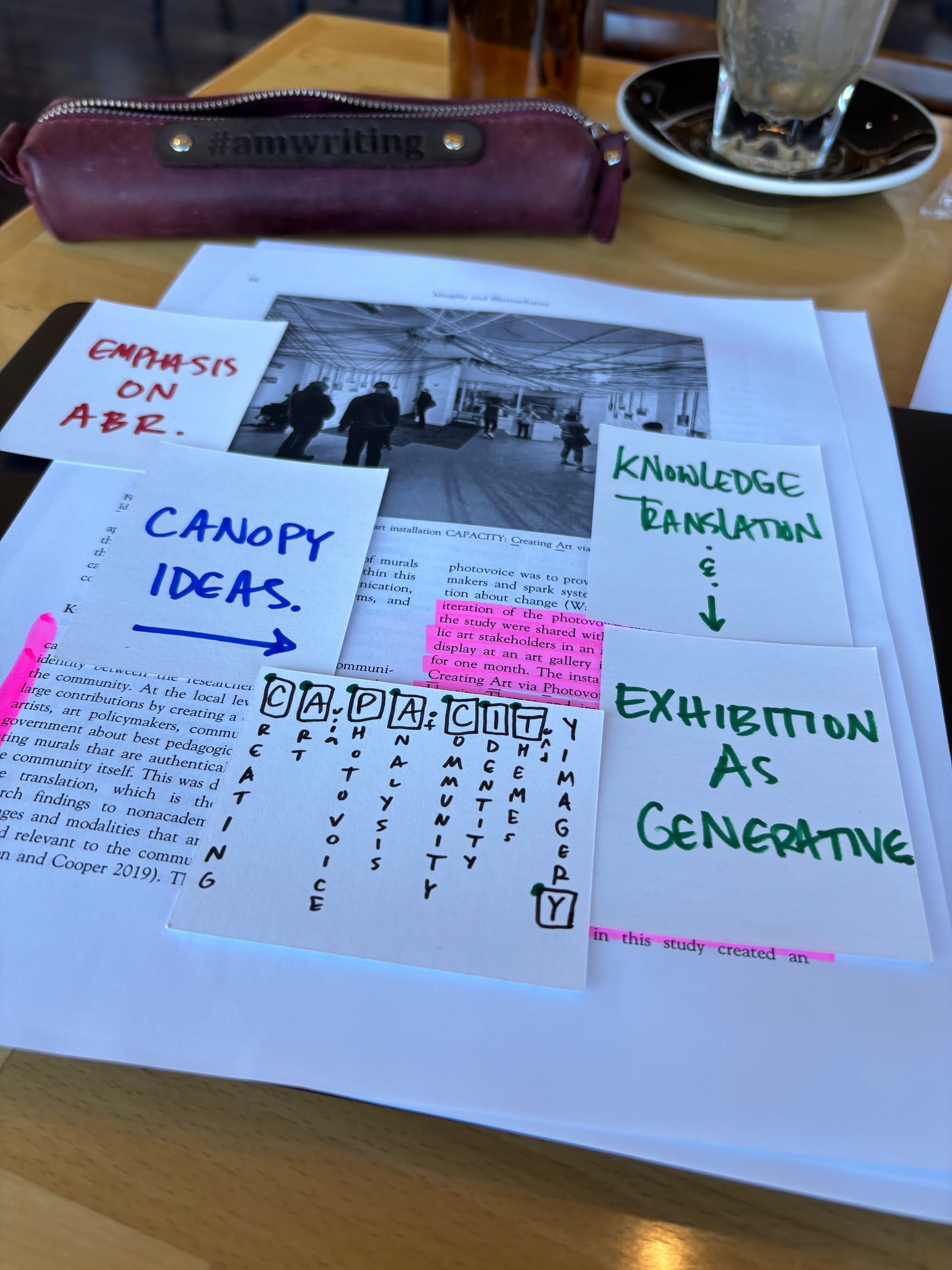
I just had to double-click on a journal article with the above title that arrived in my inbox through Google Scholar. And I am really glad I did. First, Pennsylvania is my home state. Next, community and place identity are interesting concepts to me. And, finally, well, photovoice in a Geography journal? Yes, please. Also, I have been to Centralia several times, so.
The article, "Exploring Sense of Community and Place Identity via Murals: A Photovoice Study in the Anthracite Coal Region of Northeastern Pennsylvania, USA," written by Lisa Murphy and Shamayeta Bhattacharya, was published a few days ago in Annals of the American Association of Geographers. As always, read on here and read the original piece. It was fascinating.
The authors used photovoice as a vehicle for exploring residents' of (and around) Hazleton, Wilkes-Barre, and Scranton perspectives on their communities' and places' identities. This part of the country is "home to the only reserve of anthracite coal in the United States" (p. 4). Furthermore, it was the study's site because of "unique industrial history, rapidly shifting demographics, and recent targeted efforts to use public art for economic revitalization" (p. 4). Sixteen participants completed the entirety of the project. They were asked to respond to the following prompts:
- Take a photograph of a mural or part of a mural that you feel connects most with your sense of community and place identity. Record or write why you feel that way.
- Take a photograph of an object, landmark, person, or other entity that you feel would best describe your sense of community and place identity. Record or write why you feel that way. (p. 7)
There were three major findings of the project: (a) Northeastern Pennsylvania (NEPA) evolution; (b) holistic well-being; and (c) social responsibility. These findings were derived from themes connected to notions of history, transformation, renewal, nature, recreation, mindfulness, inclusivity, service, and unity.
In what follows, I share my main four takeaways from this interesting and innovative piece.
Emphasis on Arts-Based Research (ABR)
This project was art-based in several ways. While photovoice certainly has connections to ABR, I think of it more as a form of—or residing under the umbrella of—critical participatory action research (CPAR), which can also have connection to ABR, but I digress. Yet here we have a photovoice project largely about art (i.e., murals). There are a lot of layers and complexities to consider here.
The authors noted that "[b]y incorporating art installation, photography, and art criticism into this study, the creative acts involved in art-making offer a more involved and engaging way to make observations as a researcher, engage in a higher form of critical analysis, and communicate findings" (p. 4).
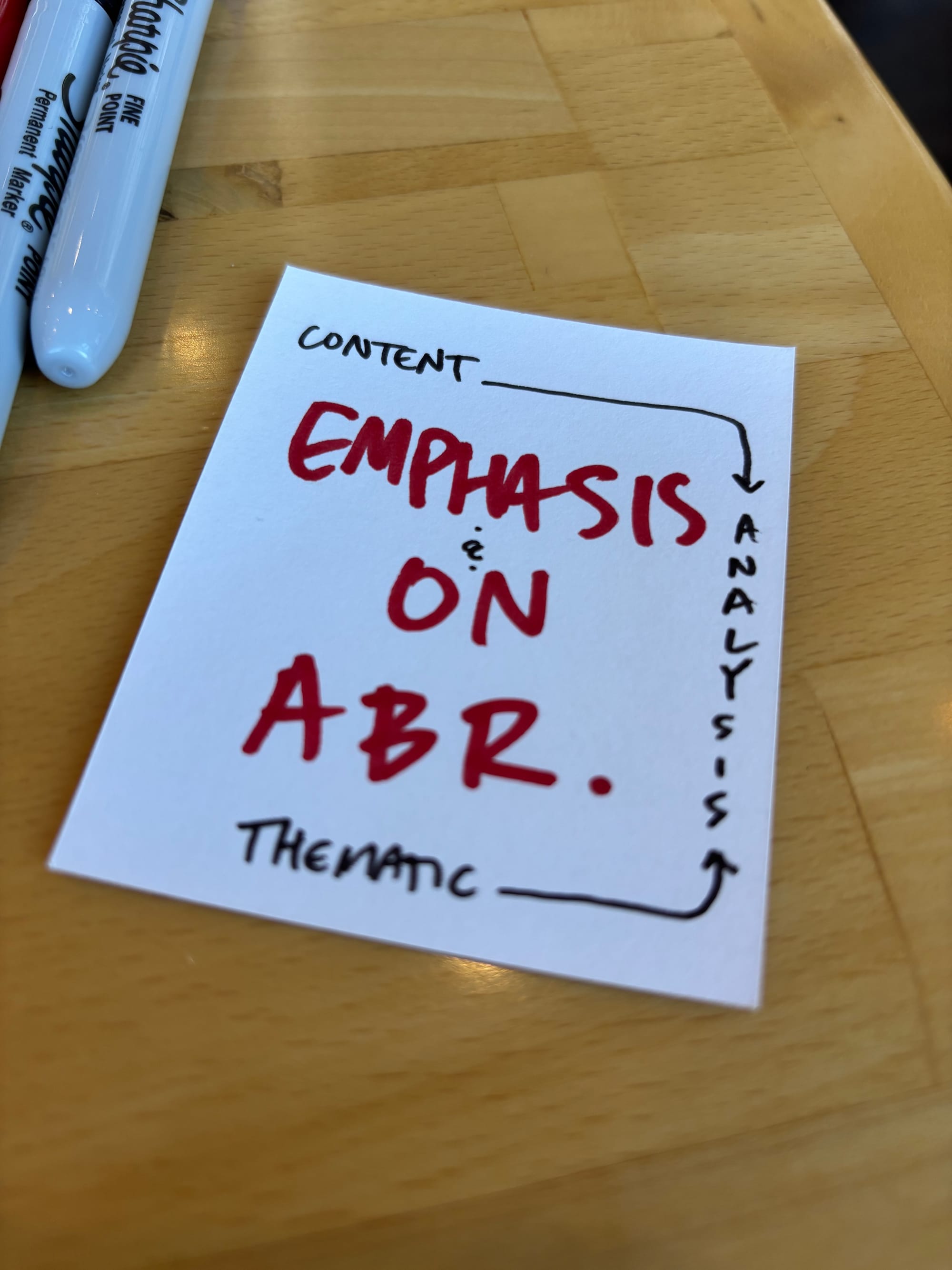
Quite right. This particular photovoice study skewed toward ABR in at least two ways. First, one component of the analysis included reviewing the photographs as artful data. In fact, the authors noted that "it was necessary to conduct both a content analysis and a thematic analysis of the photographs" (p. 8). Feldman's four-part art criticism model was used to analyze the photographs' contents. And this phase of the analysis was completed by the participants. In my view of photovoice, the photographs are not data—at least not data to be interpreted by the researcher or project facilitator. However, I can see how these particular photographs were considered data—and why art criticism was useful as an analytical tool for content analysis. Second, the project exhibition did not simply showcase the photographs and narrations of those images. The photovoice exhibition was an art installation. This is enumerated further in the next section.
Canopy Ideas
The authors noted that thematic analysis deployed within the study yielded nine themes. These nine themes were then collapsed into three broad ideas, which the authors termed canopy ideas, which "can be visualized as a hierarchical canopy that relates and summarizes the nine themes" (p. 14). I found this an interesting way to present what we might call findings. However, not only did these canopy ideas serve as a way to convey the study's results in text, they also were used to create literal canopies as part of the art installation.
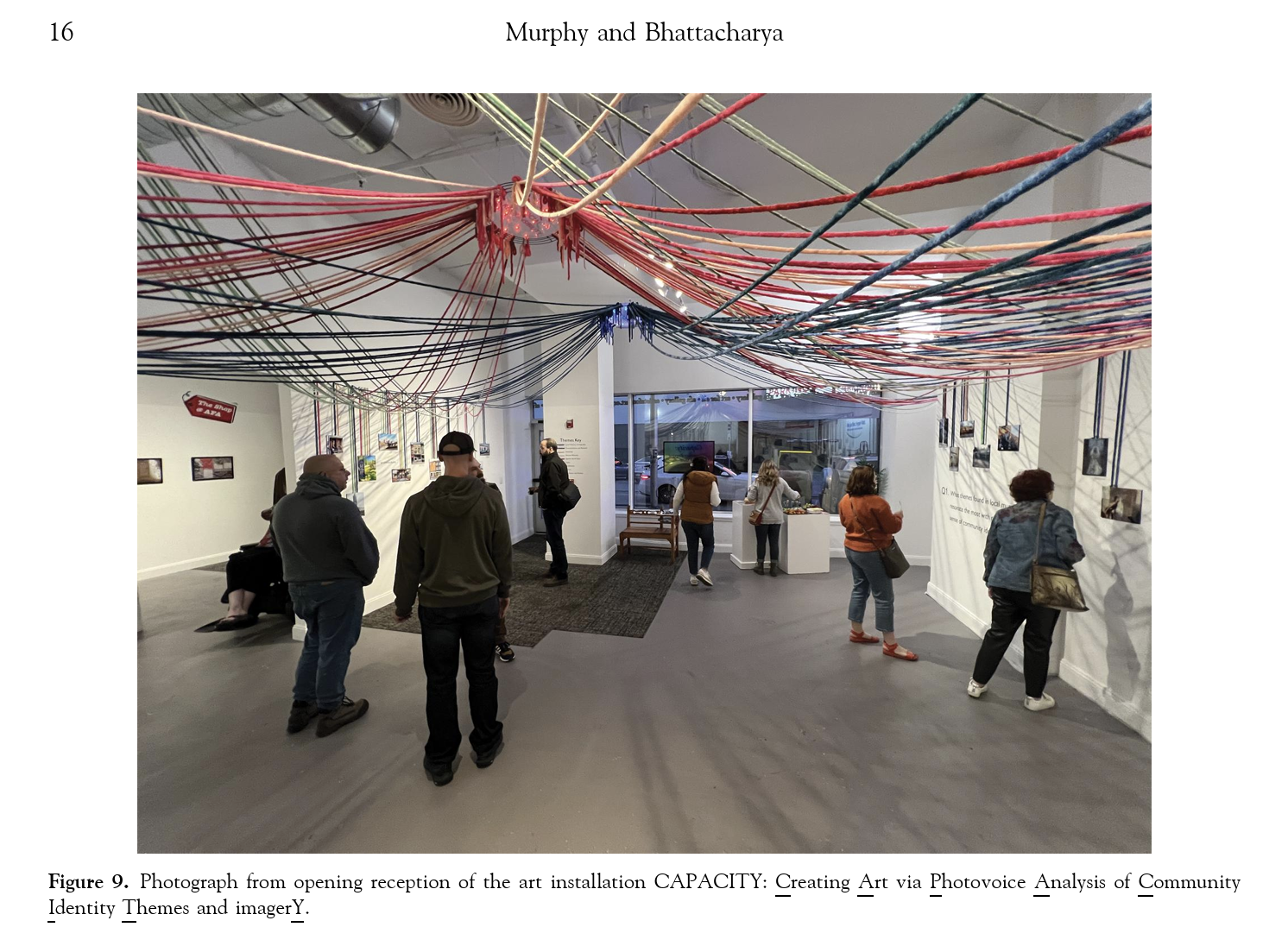
Images on pages 15 and 16 of the paper includes photographs of the art installation (i.e., photovoice exhibition). The authors shared that "the canopy ideas became literal canopies, and the strands of yarn converged overhead to make the installation an immersive experience for visitors" (p. 17). The installation included all 69 photographs submitted by participants. And each of the nine themes was symbolized by a different color yarn. All the photographs were then connected, literally through pieces of yarn, to overhead disks representing the canopy ideas. NEPA evolution was signified with blue tones, holistic well-being with green tones, and social responsibility with red tones. The result was gorgeous.
In this way, those who visited the installation could literally see the connections between the images and the ideas as mediated by the themes generated through analysis.
CAPACITY
In the context of this work, CAPACITY is an acronym that stands for Creating Art via Photovoice Analysis of Community Identity Themes and ImagerY. It was also the title of the art installation that was on display in Scranton, PA for a month.
The authors noted that the installation
occupied two adjacent rooms within the gallery. On entering through the main gallery door, visitors were greeted with introductory information about the study in the first room, including an interactive map of murals across the region and the four most photographed murals in the study. When visitors entered the adjacent gallery room, they found the research questions applied to the walls along with the sixty-nine photographs included in the study. (p. 16)
Research questions are on page 7 of the article if you are interested.
I was quite impressed by the design of this art installation as photovoice exhibition. Not only were the images and narrations shared, also made plain was the analytic process through intentional and creative symbolism. Within the installation, viewers could grasp both process and product.
Knowledge Translation and Exhibition as Generative
Not only was the art installation a place and space to translate the new knowledge gleaned from the project to onlookers, it was also a generative site for ongoing meaning making among attendees. This is a key component of what I call the confirmation step of photovoice.
On page 16, the authors noted that "this study made large contributions by creating a conversation among artists, art policymakers, community members, and government about best pedagogical practices for creating murals that are authentically representative of the community itself."
The CAPACITY installation was fodder for dialogue and conversation about notions of community, place, identity, and art. In conversation, project participants and various members of the community came together to better understand what exists (and why) and dream about the future of the area, considering possibilities about intentionally co-shaping the community's and place's identity through murals as beautiful artworks and important cultural symbols.
Before reading this piece, I had not before thought much about geography-oriented photovoice projects. Yet now I see its place clearly. There was a lot to learn from this article, and I highly recommend it.
🥹 Thanks for spending a moment with me this Friday.
💌 If you’re new here, welcome! I hope this space becomes one you look forward to each week.
📖 Interested in a book version of these posts? Check out the paperback and ebook!
📬 Have a question you want me to answer in a future post? Reach me at photovoicefieldnotes@gmail.com. I'd love to hear from you.
Thanks again for being here.
Warmly,
Mandy
photovoice field notes
https://www.photovoicefieldnotes.com/