four note friday 2.42 | Planning WITH and/or FOR Photovoice Participants

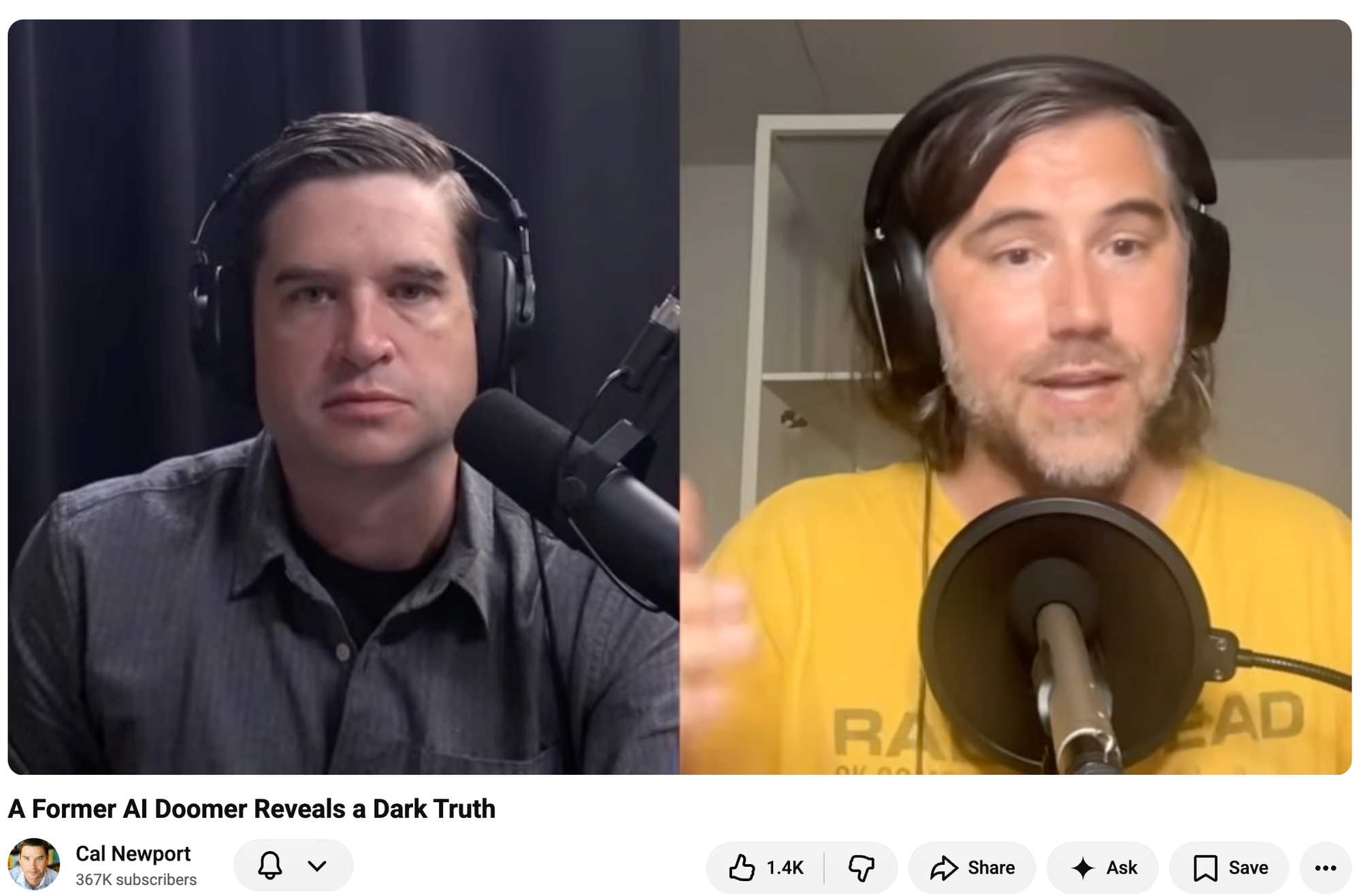
I've had a lot of time on the road this week. So I had time to catch up on my regular podcasts. Over the past few months, I have found Cal Newport's takes on AI really helpful as the popular rhetoric has ramped up and gotten rather grim. His occasional Thursday AI-themed episodes have been a salve of sorts.
The long-form episode I listened to while driving featured commentary from Émile Torres. They spoke about the nuances of the TESCREAL movement (please Google it). The conversation was so interesting, I listened twice. While this post is not about that podcast episode, something Torres noted really stood out to me and inspired the title of this piece. Citing one of his colleagues, Monika Bielskyte, he emphasized that designing with, not for, is critical for building democratic futures. Listen to the podcast to get an understanding of TESCREALists futures. Not so democratic.
This notion of designing with, not for, got me thinking about an email I received last week from a doctoral student who reached out with a request for resources related to "running photovoice with disabled advocates, including those blind of other visual disabilities." I sat on that email for about a week, thinking about how to respond. I reflected on my own photovoice-related experiences working with persons with blindness or low vision. But after the podcast, I realized what I needed to say.
In my response message, I advised the student in the following way:
My best advice here would be to plan the study with the participants rather than plan the study for the participants. Is there a way you might enter into dialogue with potential participants/collaborators to gain a better understanding of how they prefer to engage in photography/image making?
Your participants will be your best resource in this case, I think (versus readings). I would enter into potential conversations with ideas (i.e., menus) about what might be possible in order to get ideas flowing but make space for their suggestions/preferences to guide your study.
In what follows, I want to further break down why planning the study with participants is preferable to planning the study for participants.
It's okay to not know all the answers.
If you are interested in facilitating a photovoice project, it is probably because there are things you would like to learn, problems you want to help solve, and people with whom you'd like to partner. Not knowing is an important starting point for most systematic inquiries, photovoice included.
When starting out working on a photovoice project, there is no possible way to have or know all the answers at the very beginning. It takes a lot of continuous work and a strong willingness to learn in order to facilitate such a project in meaningful and thoughtful ways. You must be flexible, adaptable, and humble.
Not only is it okay to not know all the answers, it's preferable. That way, you are always learning.
It's not okay to make assumptions.
You can read countless articles, book chapters, books, and websites about photovoice. And you should. But you also need to be an active member of the social world; you need to be human with the participants or collaborators with whom you'd like to work. Most photovoice projects require some level of sociality.
Let us consider the example outlined above. I could have pointed the student to online resources about sensory photography, such as this site or this site. However, we cannot make assumptions about how participants will want to create photographs.
Rather than assuming a particular approach will work for folks, brainstorm a menu or list of potential options, share those possibilities, then engage in conversation. Enter with ideas, not assumptions. Then, seek collaboration.
Be participatory, not paternal.
Planning with participants is a participatory starting point. Planning for participants is a paternal starting point. You'll get much farther with a participatory starting point.
Plan for—but just a little bit.
While I am clearly advocating for planning with participants, a little planning for is a-okay. Menus are a good thing, for example. I've written about this previously. See here. Yet you do not want to overdo planning with. In other words, planning with participants should not place an undue burden on them.
Sometimes participants are disinterested in collaboration. Sometimes they just want to participate. They may want to play a supportive role but lack the time for anything more. And that is okay.
So, in a sense, some level of planning for can be helpful—and necessary—in certain instances.
Stay open. Remain flexible. Gauge the participants' level of comfort with collaboration by discussing it directly. Ideally, we plan with. And, sometimes, it really is best to plan for.
Our earliest socialization regarding research often begins with the scientific method. Experiments. Control groups. Experimental groups. Hypotheses. Interventions. Lab books. Results. Replication. In other words, we are very accustomed to planning for, not with. In so many ways, photovoice flips the script on what most of us initially learned was proper research. What about this post resonates with you? Where are the dissonances? I'd love to hear your thoughts.
🥹 Thanks for spending a moment with me this Friday.
💌 If you’re new here, welcome! I hope this space becomes one you look forward to each week.
📖 Interested in a book version of these posts? Check out the paperback and ebook!
📬 Have a question you want me to answer in a future post? Reach me at photovoicefieldnotes@gmail.com. I'd love to hear from you.
Thanks again for being here.
Warmly,
Mandy
photovoice field notes
https://www.photovoicefieldnotes.com/