four note friday 2.20 | Photovoice Workshop, Day 1 Reflections

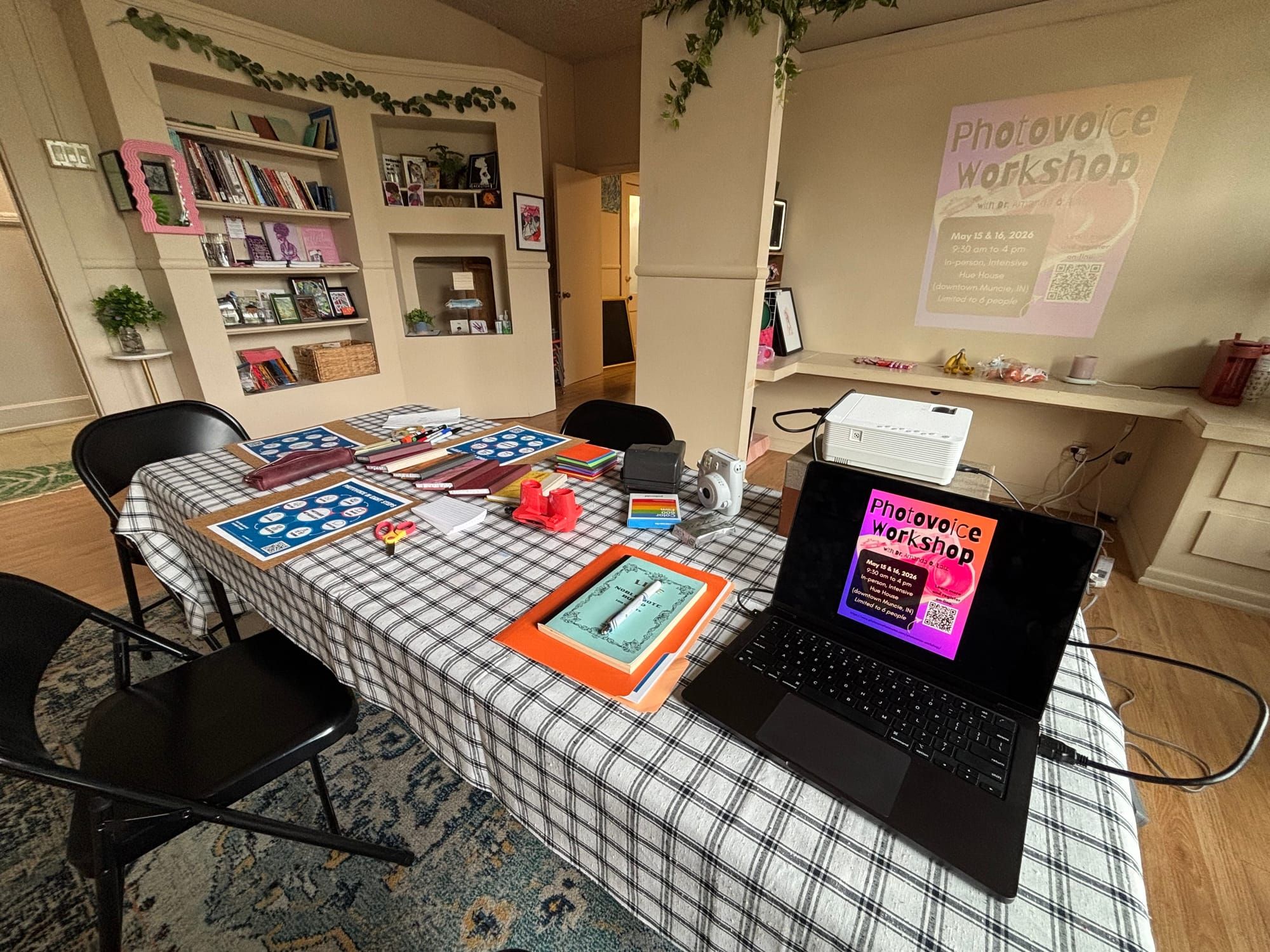
Today was Day 1 of a two-day photovoice workshop I am hosting here in Muncie, Indiana. Just a bit ago, I arrived home buzzing with excitement and tiredness. I've done loads of public speaking, presenting, facilitating, and teaching, yet the nervousness is always there lurking in the background. It's there because I care about what happens in these spaces. Today was no exception. As I arrived home holding holding deep fulfillment and a touch of fatigue, I wanted to dedicate this week's post to reflecting on the day.
The workshop is comprised of me and three attendees, who are fascinating and wonderful. Each arrived to the space with a project in mind, so we were able to engage in a tapestry of dialogue and discussion, direct instruction, and hands-on activities. And rather than give a play-by-play of the workshop curriculum, here I will provide four main reflections after having spend the day workshopping.
Analog photography still has a place within photovoice.
As part of today's workshop, we took a lot of photographs using instant cameras. Smartphones were not used at all—none of the in-workshop images we took were digital. The final hands-on activity of the day really highlighted for me that analog photography still has a place within photovoice in our increasingly digital world.
The last hands-on activity we did I termed Scrapbookvoice Lite. I provided the group with three photography prompts to select from, and we landed on: What are your initial and enduring impressions of Muncie, Indiana? One attendee is semi-local, but the two others are not. Both of the latter had never been here before.
Once we landed on the prompt, I explained that we'd be engaging in a truncated photovoice projects—scrapbook pages being our exhibitions, hence scrapbookvoice lite.
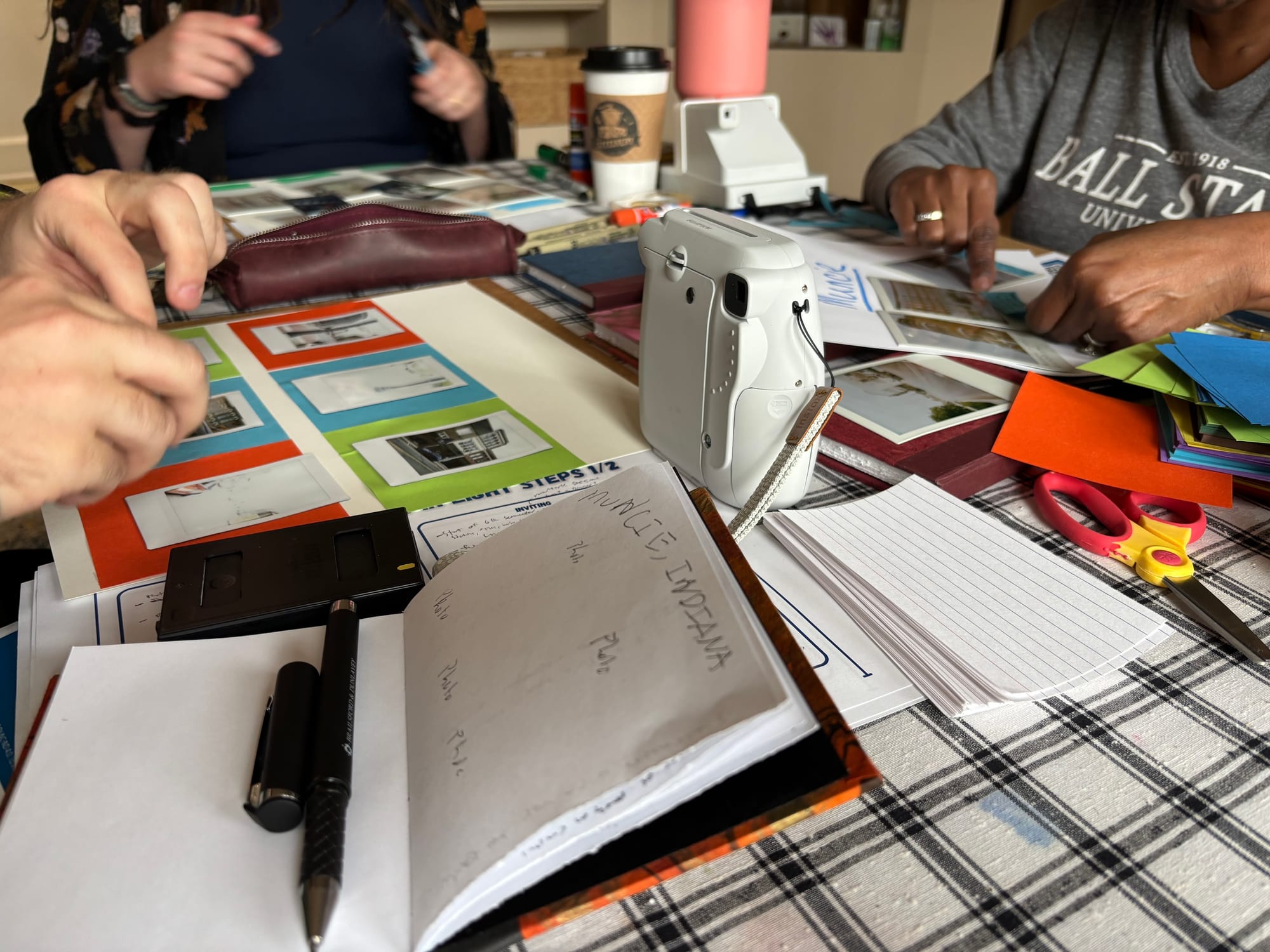
Each attendee took a roll of instant photographs (one with a vintage Polaroid, one with a modern Polaroid, and one with a Fuji Instax Mini) in response to the above question. They then assembled their images onto a scrapbook page, added visual embellishments, and wrote captions for each of their images.
What stood out to me was the gentle and contented hum within the room as the attendees worked on their pages. I was not necessarily anticipating that the activity would be so satisfying and enjoyable to the participants.
Yet they remarked on how nice it was to move around, take photographs, write by hand, use scissors and glue and tape, and create something physical as a way of learning. They also had to be very patience as their photos developed and sharpened into focus, a very different experience than smartphone photography.
While I know analog photography can be expensive and time-consuming, the benefits of analog work were clear to me this afternoon. Gathering in-person, working slowly but intentionally, and sticking with analog modalities still have an important place within photovoice work.
Yes, you can still get film developed.
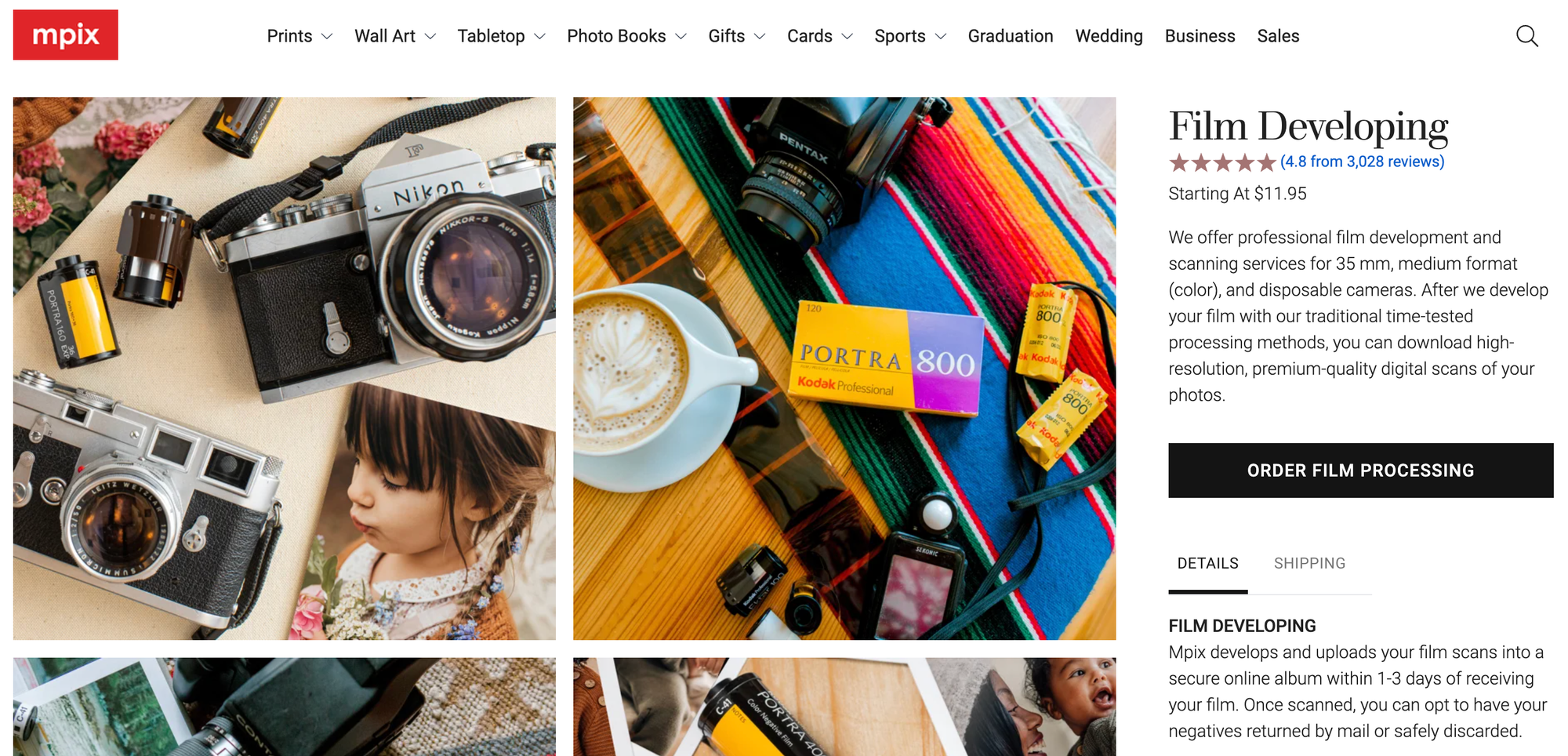
While easily accessible camera shops may no longer be ubiquitous, yes, you can still get your film developed. In fact, one of the attendees absolutely raved about mpix. It was the customer service that impressed her most!
While I have never used their services, the process seems simple (see https://www.mpix.com/film). Just mail in your film or disposable camera, and they take care of the rest, whether that means requesting digital scans of negatives, ordering full prints, or having the negatives mailed back to you.
In an age where film development is not accessible as it used to be, this service makes the process simple and seamless. And, not, this is not a sponsored post.
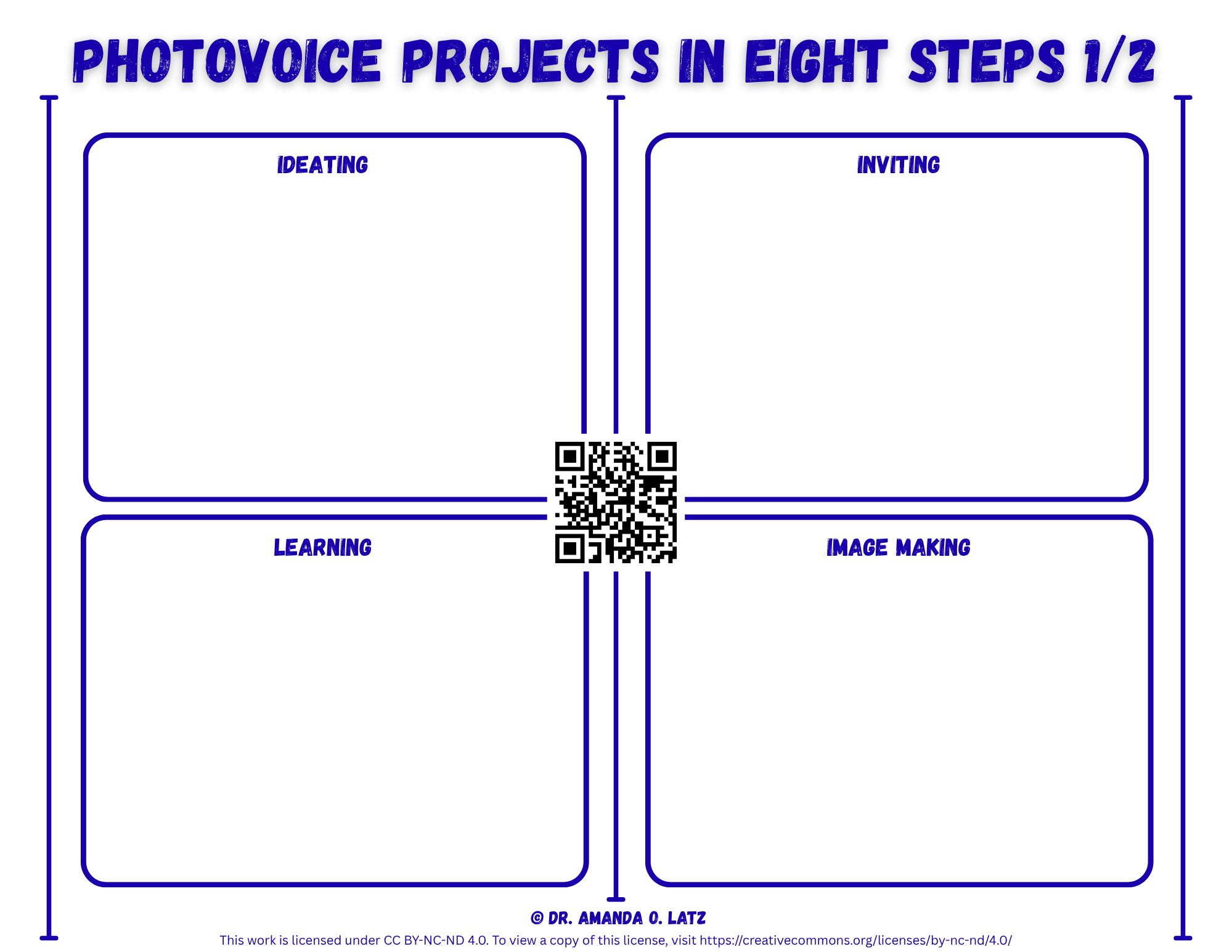
Digital downloads are cool, but nothing beats an old-fashioned worksheet.
And now that I have asserted that, I will upload digital versions of our handout below so you can see for yourself. If you are anything like me, it may have been a minute since you have engaged with a worksheet—let alone created one for learning purposes.
But the worksheet work we did today was excellent—dare I say fun! Let me break it down.
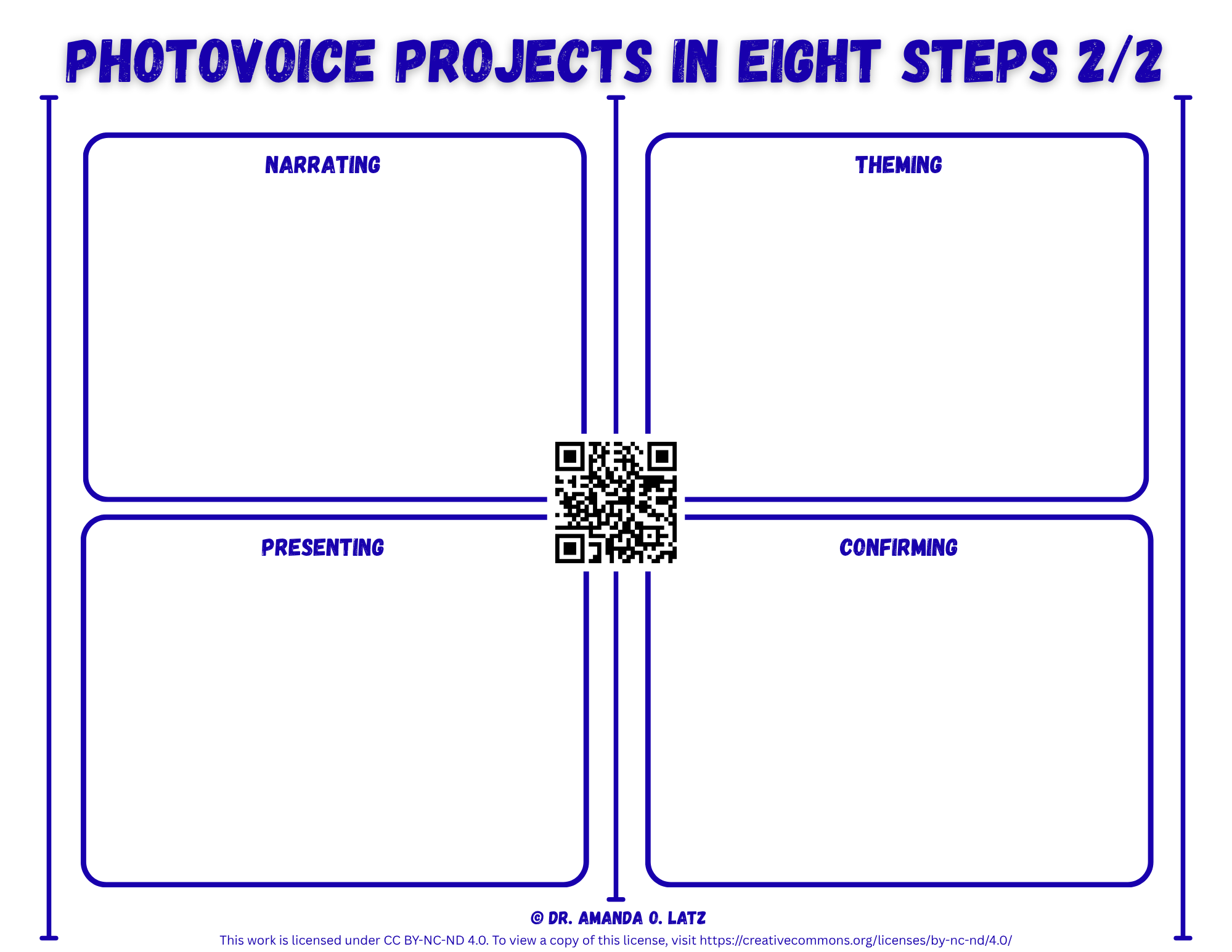
First, I went over the eight steps of photovoice, which I outlined in my book and have since updated (I was delighted when one of the attendees pointed that out!). Then I provided a handout. See here. And, finally, because this workshop is really meant to support the attendees' own projects, I had them use worksheets to brainstorm and sketch out some of the details of their projects using the eight steps as a graphic organizer.
These worksheets were worked over, and I loved to see it. Previews are followed by downloads below.
I've missed this.
The last time I did something similar to what I am doing today and tomorrow was 2019. The pandemic put my photovoice workshop and conference dreams on hold—for seven years. It's good to be back at it. It's good be in the same physical space as people. I am honored and thrilled that these three people came (all the way) here to do this thing with me. I've missed it. I hope they are getting a lot out of it and enjoying themselves along the way.
It lets me know that maybe this type of small-scale, in-person, intensive workshop format might still have some interest in light how Zoom has changed many of our (work, educational) lives. Time will tell.
Stay tuned for next week's post, when I plan to reflect on the workshop as a whole. Now, it is time for a bit of rest and recuperation. Until then!
🥹 Thanks for spending a moment with me this Friday.
💌 If you’re new here, welcome! I hope this space becomes one you look forward to each week.
📬 Have a question you want me to answer in a future issue? Reach me at photovoicefieldnotes@gmail.com. I'd love to hear from you.
Thanks for being here.
Warmly,
Mandy
photovoice field notes
photovoicefieldnotes.com