four note friday 2.12 | Photovoice and the Dissertation, Part 2
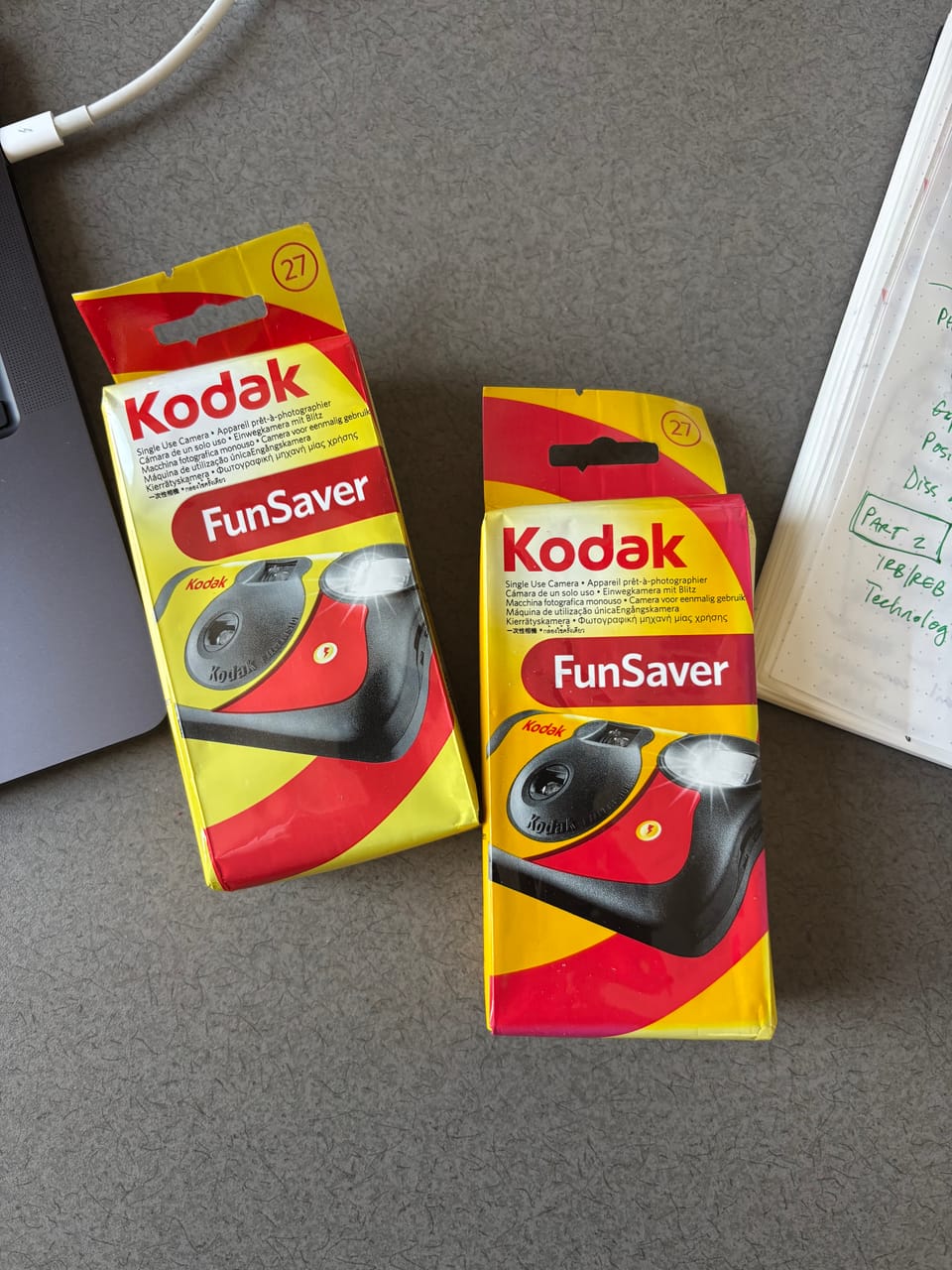
As I mentioned a few weeks ago (see here), I had/have more to say about photovoice and the dissertation. A photovoice dissertation is a complex process, as all dissertations are, that requires a lot of brainstorming, preparation, reflecting, and planning. It also requires a lot of work.
In what follows, I will build out another four notes for your consideration if you are engaging in a photovoice dissertation or soon plan to be. A third part may be necessary in this series. In the meantime, here are another four axioms that might be helpful on the journey.
🟣 Get your ethics board (IRB/REB) materials together and organized as soon as possible.
The ethics board approval process can be tough. There may be delays, significant questions, and required edits. Like I wrote about in an earlier post, do relational work with the member of your institution's institutional review board (IRB) or research ethics board (REB). These boards consist of actual people—people you can talk with. Remember, most ethics boards are not photovoice experts. Getting clear on policies, procedures, requirements, and timelines ahead of submission can save time in the long run.
As you write your methodology chapter(s), build your IRB/REB materials in tandem. The two processes should complement and inform one another. If you are asked to explain something through your IRB/REB application, that explanation should also be in your chapter(s). Completing the IRB/REB application will also force you to make some decisions about the study. And this external pressure can be helpful as you work through the logistics of the project.
🟣 Get your technology sorted out.
Today's photovoice projects are likely to infuse all sorts of technologies throughout the process. Here are some key questions to consider that may indicate the need for some type of intentional technology use:
- How will you recruit participants for the study?
- How will participants indicate interest in participating in the study?
- How will participants take photographs?
- How will focus groups/interviews take place? How, exactly, will photo elicitation be carried out during the focus groups/interviews?
- How will data be analyzed?
- How will the project be presented in an exhibition or series of exhibitions?
Answers, however tentative, to these questions are necessary early on in the project.
🟣 Create a system for updating and/or checking in with your supervisor/doctoral committee chairperson.
People working in higher education (globally) right now are being pushed and pulled in ways like never before. To be clear, your supervisor/doctoral committee chairperson is taxed. They are busy. They are tired. It's not you. It's not them. It's the system. Rather than framing this reality as a negative, see it as an opportunity to create a system that benefits both parties.
Consider setting up a shared folder where you house all documents and files related to your dissertation. Consider sending a bi-weekly highly structured email to your supervisor/chair with consistent sections: updates, questions, and deliverables. Add links to files in the folder. Consider requesting monthly 30-minute meetings to touch base on any matters that might require a conversation. Prepare and share an agenda ahead of time.
Whatever you decide, get input and buy in from your supervisor/chair. Find ways to mesh their expectations with your work flow. Manage up where needed. Ensure they are always aware of where you are in the process.
🟣 If you get stuck on writing, read.
Often times I have a hard time getting started with academic writing if I have not read enough. What counts as writing should be more than just creating words inside a word processing program.
When doing academic work, I always find it a lot easier to write in response to something than to just write based on whatever thoughts I am able to concretize on the page. Let us imagine you are working on a section of your dissertation focused on quality assurances within qualitative work. Rather than write inside your dissertation document from off the top of your head, read some books, book chapters, and journal articles on the topics and make detailed notes along the way. Write as you read inside a notes document. Then, transfer and synthesize those notes into your dissertation.
A dissertation is a long document, often times longer than a book manuscript. It becomes tough, at times, to work within a very long document. Break up the writing into various documents, then patchwork the dissertation together, smoothing as needed. You will likely have separate documents for notes on the literature, interview/focus group transcripts, analytic memos or researcher journal entries, and chapter drafts. And that is all okay. Writing in a shorter, condensed, and focused document can make a very long and arduous process feel small and attainable. That is the key to completion! One specific step at a time.
The photovoice dissertation is a unique voyage. The considerations and logistics are many. And the work is tough-going. Yet others have done it, and many are currently doing it. What are your thoughts here? What resonates, what contradicts, what confuses? Would love to hear from you.
🥹 Thanks for spending a moment with me this Friday.
💌 If you’re new here, welcome! I hope this space becomes one you look forward to each week.
📬 Have a question you want me to answer in a future issue? Reach me at photovoicefieldnotes@gmail.com. I'd love to hear from you.
Thanks for being here.
Warmly,
Mandy
photovoice field notes
photovoicefieldnotes.com
Member discussion