four note friday 1.13 | Take-aways from 'Braiding the Healing Gifts of Photovoice for Social Change: The Means Are Ends in the Making'

Last week's post was quite enjoyable to write, so I am mimicking that process this week with a different—but similar—article. This article has a trio of authors including Drs. Mary Ann Burris (co-founder of the methodology along with Caroline C. Wang), Robin Evans-Agnew, and Robert Strack.
Written recently (2023), the piece is a braided narrative of the three authors' reflections on using photovoice within various projects, all within the context of public health. This piece was published in the journal, Health Promotion Practice, the same outlet for Wang's piece, which I featured last week.
This article is all about the process of photovoice, rather than the product(s).
It is required photovoice reading.
The title is a bop. I love the assertion that the means are the ends in the making. This rings so true for me and the work I have done with the methodology. And this is a terrific lead-in to my first take-away, which was a key part of one of Burris's narratives within the larger braid. Please read on.
🗺️ 🛣️ Take-Away #1: How we go is where we get.
What a profound statement, which I think is axiomatic. This is really the point of the entire article. The process drives the outcomes. How you engage with the process is where you will end up at the end. I cannot overemphasize the profundity.
This excerpt is taken directly from one of Burris's narratives on page 1126 of the article. She wrote "I want to explore the ways that 'the means are the ends,' in our work, that how we go is where we get" (italics added).
You cannot lead a photovoice project without care, compassion, and a commitment to the people and the project. Participants will sense a lukewarm commitment to the work. Participants will notice if you schedule meetings in ways convenient to you but not them. Participants will feel invalidated and unmotivated if you act like and think you know better than them.
On the other hand, leading with care, compassion, and commitment will bring about a result embodying those same characteristics. The relationships built along the way may last a lifetime. At the very least, the relationship-in-motion will be authentic and gifts—often healing gifts—will be exchanged. Asking someone to be a part of a photovoice project is not the same as asking someone to complete a survey. It is an invitation to journey together. It is not extractive, but it can be mutually beneficial.
If you place direct emphasis on how you go on the photovoice journey, where you end up will be exactly where you need to be.
❤️ 🫱🏽🫲🏼 Take-Away #2: Relationships matter; everyone matters.
The take-away above is a lovely segue to this second take-away. Indeed, relationships matter, and everyone matters. Burris noted the following: "I proved to myself that everyone matters, everyone has emotions, and that my work in healing is to create places to unite people within circles of reflection and action" (p. 1128). Several excerpts from the manuscript emphasized the importance of relationships within photovoice projects. Let us organize these relationships in three categories:
Researchers-Participants. We do not typically think of researchers and subjects as being in any sort of relationship with one another. In fact, such a thing could poison the results. That kind of orientation to research is totally upended with critical participatory action research projects like those deploying the photovoice methodology.
About his first photovoice project, Evans-Agnew said: "I realized my relationships with these students were changing in a good way through the sharing of their experiences and in our determinations of actions through solidarity" (p. 1126).
If you, as a researcher-facilitator, are committed to the people and the project, solidarity will blossom. And solidarity is a powerful pro-social force.
Participant-Participant. One of the more heartening relational elements of photovoice is witnessing relationships grow between participants as they begin to realize they are not alone. Not only are they in the project together, but the overlapping pieces of their lives become visible over time. That is a powerful catalyst for relationships.
Burris said "[p]hotovoice strengthened the relationship between the photographers and opened a window between them and others" (p. 1126). Another lovely relational element of the process is when, for example, exhibition attendees engage with a photovoice-narration then meet the photographer-narrator, an instant connection or micr0-knowing is generated between the two without them ever having to utter a word.
Researcher-Participant-Policy Makers. Relationships between the project team and policy makers are also important, especially within the domain of policy change. Sometimes it make sense and is possible to engage policy makers from the very start of the project. Sometimes that involvement is simply not possible.
Evans-Agnew observed that getting policy makers on board with a photovoice project at the start is recommended within the literature. Yet he also questioned "how exactly was one supposed to do that? Politicians are fickle, administrators follow the money, and CBPR [community-based participatory research] I found was unpredictable, underfunded, and required a lengthy time commitment" (p. 1128).
This, to me, represents an opening through which the Multiple Streams Framework (MSF) from John Kingdon can come into play. The policy entrepreneur can serve as an intermediary between the photovoice team and policy makers. While a full treatment of this idea is beyond the scope of this post, it is an idea I am actively working on.
🪫 📫 Take-Away #3: Getting policy makers' attention is hard.
As Evans-Agnew articulated above, getting policy makers' attention is hard. I've recently been interested in bridging the photovoice literature with the policy change literature base. There is a lot of potential within this cross-pollination, I believe.
About a recent project (see this piece), Evans-Agnew said:
Here, a policy entrepreneur may be able to stand in the gap. The MSF shows us that timing is important when trying to make change. When problems, solutions, and timing are right, a policy change window opens, and change has the best chance of breaking through. This take-away is another reminder to me about how important understanding the policy change process can be when working with the photovoice methodology.
📊 👍🏽 Take-Away #4: People are experts on their own lives.
You might remember this very take away from last week's post. Indeed, photovoice projects take the following assertion as truth: people are experts on their own lives. Yet this statement is too often seen as false.
Yet Burris reminds us of the following, which ties a beautiful bow on this post: "By honoring people as experts on their own lives, we create a relational space for exploration, powerful expression, and the gifts of co-learning. From this, individual and collective strategies that negotiate power for change occur. Always" (p. 1131).
Always.
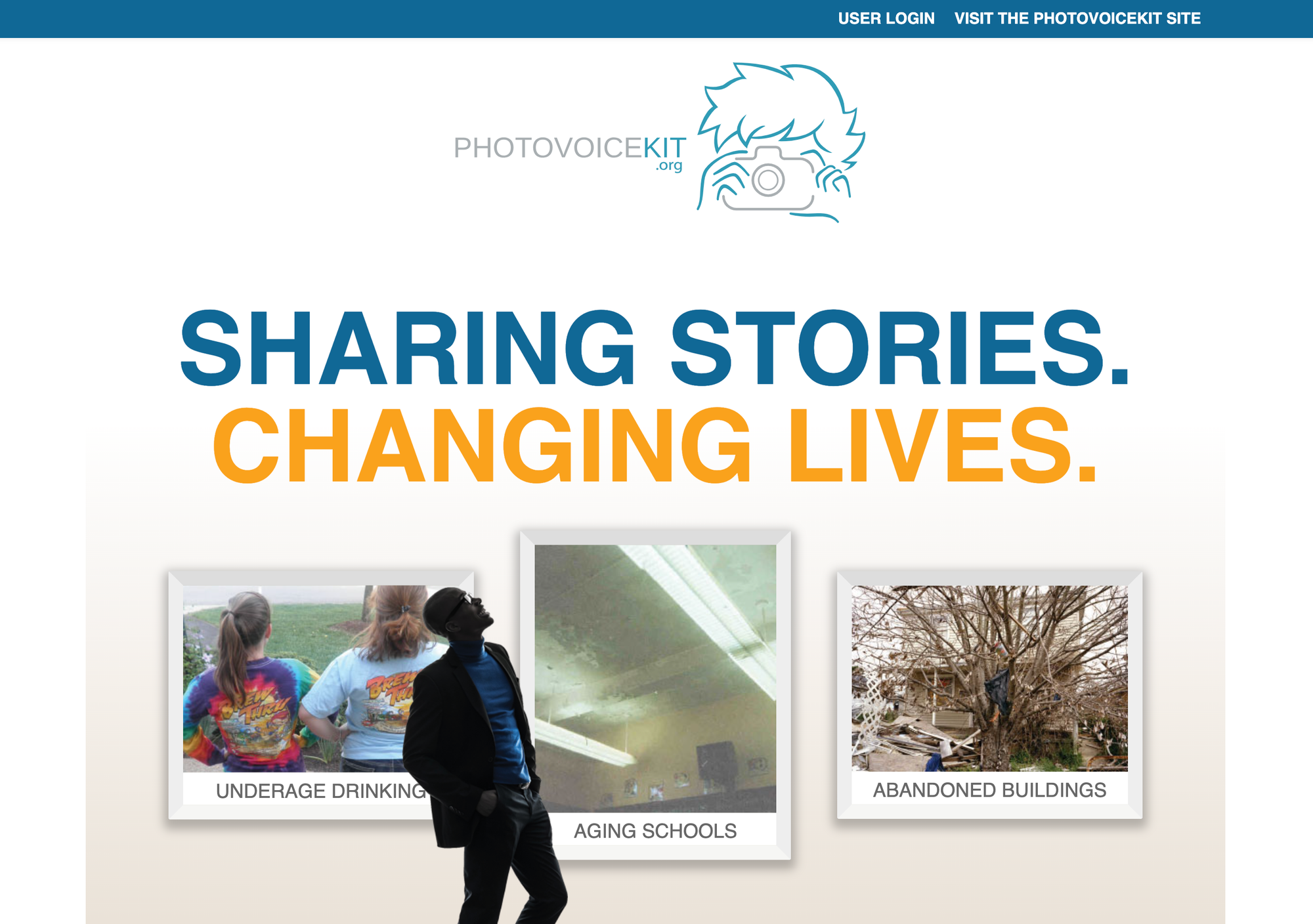
🧰 🧱 One of my bonus take-aways from the article was the discovery of the website PhotovoiceKit.org. I'd never heard of this resource before. You can read more about its development here.
🥹 Thanks for spending a moment with me this Friday.
💌 If you’re new here, welcome! I hope this space becomes one you look forward to each week.
📬 Have a question you want me to answer in a future issue? Reach me at photovoicefieldnotes@gmail.com. I'd love to hear from you.
Thanks for being here.
Warmly,
Mandy
photovoice field notes
photovoicefieldnotes.com
Member discussion